

Autonomy versus safety: the dilemma faced by social workers in cases of domestic violence
What should be done if a woman leaves her partner following domestic violence but then decides to return? The instinct to intervene comes up against a fundamental boundary: that of the woman’s autonomy. Social workers dealing with domestic violence face a complex dilemma for which there are no clear guidelines, according to Chloé Roegiers Mayeux’s PhD research.

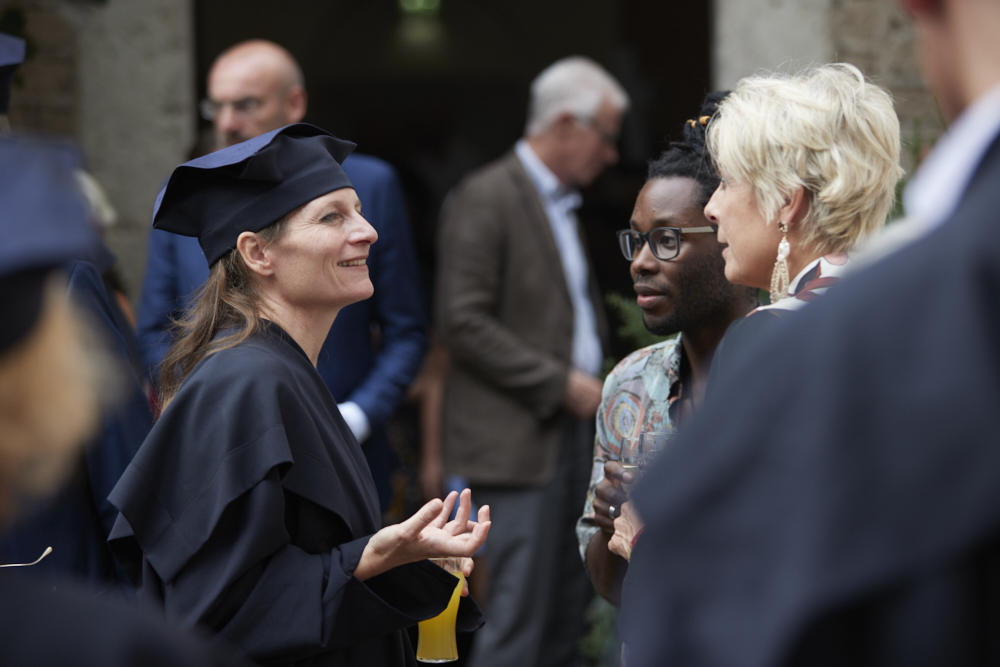
Roegiers Mayeux conducted research into the support provided to women with and without a migrant background who were victims of domestic violence in the Netherlands. On 23 April, she defended her thesis, Fragmented Solidarities: on Female Survivors of Domestic Violence with a Migration Background in the Netherlands, at the University of Humanistic Studies.
Whether in a shelter or at home: when a woman takes the step to leave an abusive relationship, she can receive support to rebuild her life following traumatic experiences. Roegiers Mayeux interviewed, amongst others, 37 social workers in women’s shelters and examined the broader context of these shelters. She also looked at the institutions and policies of the women’s shelters and the family networks surrounding the women.
Return
In practice, it appears that some women ultimately have doubts or decide to return to their partner, even when social workers assess this as unsafe. Social workers indicate that in such situations they are often left with a sense of powerlessness. They want to keep the woman safe, but at the same time must respect her right to make her own decisions. Guidelines or clear guidance on this matter are limited.
As a result, support workers develop their own approaches, depending on the situation. For example, when a return is linked to pressure from the family, social workers try to mediate culturally or involve key figures from the network in discussions with the family. If the focus is more on the hope that the partner will change, they often focus on gradual contact and on increasing understanding of patterns of violence. In situations where children are involved, social workers are more likely to explicitly highlight measures to protect the children. In some cases, social workers even maintain covert contact when the woman does return to her partner.
These varying practices demonstrate that interventions are highly situational, lacking a clear-cut framework. How social workers deal with this therefore remains largely a matter of reflection and professional judgement. Numerous factors play a role in the choices women themselves make about their future, not just their cultural background. Roegiers Mayeux emphasises the need for an approach that takes these interrelated factors into account.
There is an embargo on the download for 6 months. Read summary here.
Read also: Roegiers Mayeux, C., Saharso, S., Tonkens, E., & Darling, J. (2025). Support and Autonomy: Social Workers’ Approaches in Dutch Shelters for Female Survivors of Domestic Violence. Social sciences, 14(4), 241.