
What did COVID-19 teach us about humanity?
This week, the Dutch Parliamentary Inquiry Committee on COVID-19 is focusing on the impact of the pandemic on the healthcare sector. Researchers at the University of Humanistic Studies have carried out various studies in recent years into the moral, social and existential consequences of this pandemic.
Emerging from the crisis with care
Visiting restrictions, postponed care, the loss of support and social isolation have had far-reaching consequences for the quality of life and well-being of many vulnerable groups in society. How does humanity endure in a healthcare system that, under the pressure of a crisis, must above all function efficiently? In a series of studies, researchers from the UvH demonstrated how the coronavirus crisis affected a wide range of living environments: from care homes and care for people with disabilities to palliative care and the lives of undocumented people.
Carlo Leget, Professor of Care Ethics and Director of Research: “One of the key insights from all the studies we carried out is that vulnerability during the pandemic was often defined as a medical risk, but that is too narrow a view. It is precisely in times of crisis that policy must be caring and keep human values in mind. The coronavirus crisis thus proves to be not only a test of crisis management, but also a mirror reflecting how the Netherlands defines care, dependency and dignity.”
A key recurring theme is that moral considerations during the pandemic often remained implicit. “Decisions regarding visiting bans, triage or deferred care were primarily justified on technical or epidemiological grounds, whilst the moral impact was less visible. For healthcare professionals, this led to tensions between protocols and professional intuition.”
“It is precisely in times of crisis that policy must be caring and keep human values in mind. ”
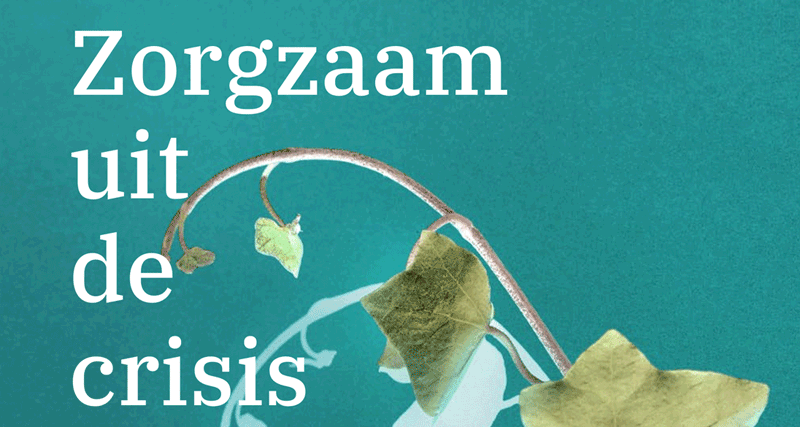
In the comprehensive report Zorgzaam uit de crisis (Caring through the crisis), commissioned by ZonMw, the insights from the studies have been translated into five guiding principles for future policy. The core of these principles is that crisis policy must not only be effective, but also caring, explicit in its weighing up of values, and embedded in relational care practices. The report thus provides a framework for professionals to assess crisis policy in terms of its caring nature.
Other studies on COVID-19 and its impact on healthcare
Gustaaf Bos and Wietske Verhagen investigated the everyday lives of people with intellectual disabilities during the COVID-19 pandemic. Their research shows how measures such as visiting restrictions, closures of day centres and social distancing rules had a profound impact on daily life, and reveals just how much the quality of life for this group depends on close proximity, familiar routines and continuity in relationships — and how vulnerable these become in times of crisis.
Read more about the research ‘Moving forward together after the crisis’.
Prof. Femmianne Bredewold focused on social inclusion, care networks and the situation of people with intellectual disabilities during the pandemic. This research shows how quickly access to day centres, support and social contact was lost, and how heavily people relied on informal networks and carers. Her research highlights that vulnerability is not just about health, but also about dependence on relationships, routines and closeness.
Read more about the COVID-19 IDD study.
Prof. Anne Goossensen focused on research into the end-of-life phase during the COVID-19 pandemic. Her research shows how visiting restrictions and isolation measures left a deep impact on patients, families and carers.
Read more about the CO-LIVE study.