‘If you can listen carefully to soft voices, you’ve already achieved a great deal’
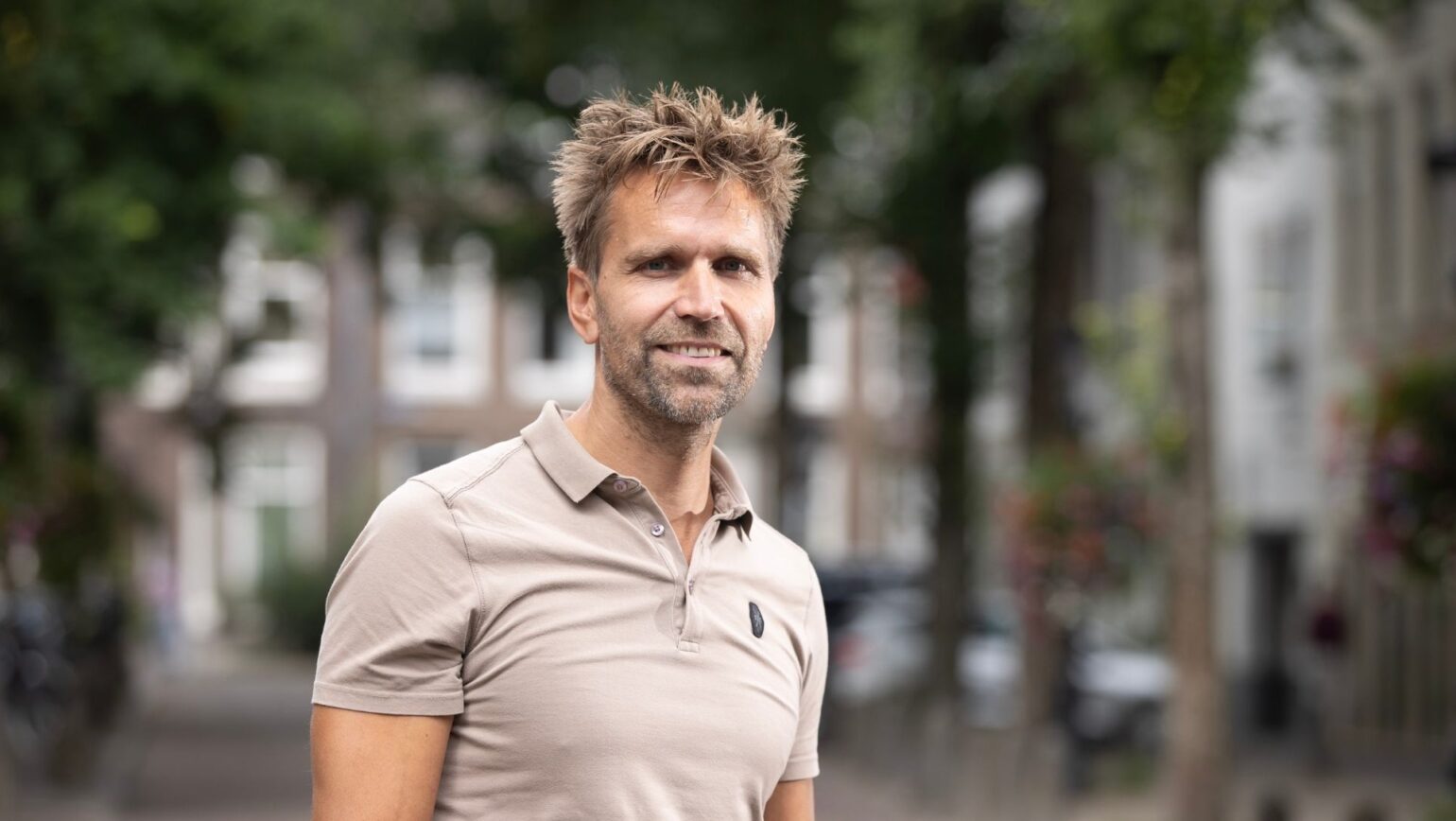
Gustaaf Bos tells about his research into care for people with intellectual disabilities.
“For the past fifteen years, I have been conducting research into care for people with intellectual disabilities, and increasingly at the intersection of disability care and psychiatry, within the field of complex care. As a researcher, I am often involved with a care setting over an extended period. There, I work with all those involved to understand what is going on: the people receiving care, care providers and family members.”
“In recent years, my approach has shifted from ethnographic research – in which you compare different perspectives side by side – towards more action research or collaborative research. The question here is not only how we can gain new insights into complex care situations, but also how we can contribute to these in a way that is appropriate for everyone involved.”
For most Dutch people, complex care is an unfamiliar world. In care settings, this care often takes place behind closed doors, and if the person concerned lives at home, there are often few people in their immediate circle who understand what daily life is like for these families. In our research, the focus is never solely on the person for whom the care began. It is always explicitly about their care professionals and loved ones as well. After all, they play a significant role in determining how care is organised and delivered.”
Relationships
“In order to develop new knowledge that is useful for these practices, we must bear in mind that all those involved contribute to the creation of knowledge. Consequently, building mutual trust and reflecting on this process is not only a means to an end for us as researchers, but often also one of the outcomes of the research itself.
In collaborative research, therefore, it is not only important what we are researching, but also how we interact with one another during that process. The relationships and interactions between all those involved – between participants themselves, but also between participants and researchers – are given a great deal of attention. How do you shape those relationships? And what do you do when differences arise, whether in motives, needs, or in how people understand the situation?”
Because we view research as an interpersonal process of getting to know one another, we also make space for something that is often less visible in traditional research: the physical, emotional and sensory aspects of encounter. That which you sometimes sense even before you can explain it. This way of working requires attention to how the process unfolds and how relationships develop. The question then is: how, as a researcher, do you give that attention in a way that is appropriate to the situation and to your position? And how do you ensure that this attention is not only thoughtful, but also contributes to something fruitful – for everyone involved?”
Intimacy
“In a long-term relationship with people in a vulnerable and isolated position, a kind of intimacy often develops that is similar to that found in a friendship. For example, there are people who live as clients in a care home and say of their carer: ‘That’s a friend of mine.’ The same might be said about me as a researcher by such a person or a family member with whom I have close contact. What do you do in that situation, and how do you respond to it? Both parties know that the relationship is temporary in nature, as the researcher will eventually leave, but for as long as the research is ongoing, that relationship exists.”
In healthcare settings, we are often told: be careful, maintain professional distance. There are all sorts of regulations in place to prevent the abuse of power. This is certainly necessary, but how sustainable and fruitful is it to maintain distance in long-term care and research? What are the benefits of taking seriously not only the risks but also the potential of getting closer? Is there such a thing as professional closeness? And, as a healthcare provider and researcher, can you be guided by the values associated with friendship?
If someone in a vulnerable and isolated position starts to see you as a friend, it’s difficult to simply say: ‘No, that’s not the case, because I’m here as a professional’. It calls for a different response, a different kind of research ethics, one in which relationships are central. Someone called it an ‘unsolicited friendship’, and I think that’s a fitting description.”
Experimental-relational space
“In settings such as complex care, interactions are heavily framed by normative expectations. It is usually people without intellectual disabilities who – sometimes unconsciously – determine what behaviour is permissible. For example, intimate physical closeness is not infrequently labelled as ‘sexual’, and in institutions this is often tantamount to being forbidden. Such interpretations quickly become very dominant without any consideration being given to alternative perspectives or consequences.”
But if you spend more time in the world of complex care and delve into what is ‘normal’ for another person, you realise that things can be very different when it comes to intimate physical closeness. What do you do then? Do you say, ‘We don’t do this’? Or do you put your own discomfort aside and allow it to happen? And what does that require of everyone involved?
What if we view the research as an experimental-relational space, where you spend a longer period of time together and try to create space for questioning established assumptions? In this way, you might be able to create more space for unconventional ways of doing things or perspectives that go unheard – or are even drowned out – in the normal routine. That is the aim of our research: to create such a space for people with soft voices or those who do not speak. What can we learn from this? And can such an approach also breathe new life into a stagnant practice?”
Movement
“My supervisor, Herman Meininger, once taught me to be modest about the impact of research. It’s mainly about listening carefully to people and accurately conveying their stories. If I manage to do that, then I’ve already achieved a great deal. In doing so, I hope that, through our collaborative work, we can be part of a movement that creates more space for cooperation and for listening to voices that are often not heard.
Of course, every piece of research has a set of quality criteria. For me, recognisability is an important criterion: that the people involved recognise what you’re saying about them and what you’re doing with their stories. Another criterion is transferability – the sense that findings can be applied in similar settings. But perhaps the most important criterion is that, once a project is complete, those involved want to carry on with what we’ve set in motion together – for example, in a learning community, a learning module, or as friends or buddies. I think those are the finest examples of how research can contribute to social change.”
Connecting knowledge
We are the University of Humanistic Studies. Through education, research, dialogue and connection, we create space for new perspectives. In doing so, we give meaning to today’s challenges and contribute to the solutions needed in the world of tomorrow.