
Collaborative project on social resilience among older people
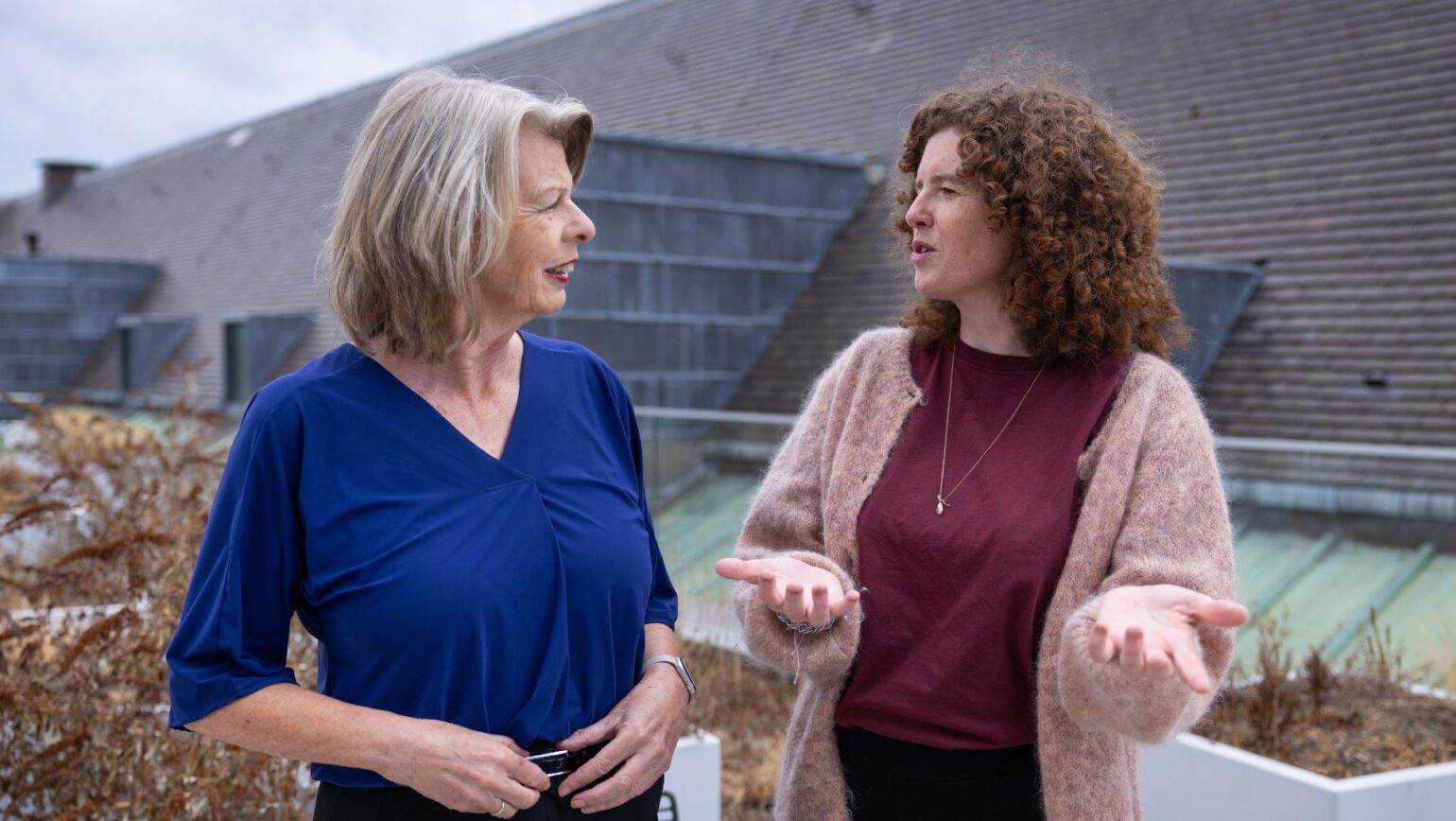
Anja Machielse, professor emeritus of Humanism and Social Resilience, has held the special chair in Social Resilience of Older Adults since 2015, a collaboration with the City of Rotterdam. Together with Inge Klück, policy adviser on tackling loneliness and finding meaning at the city council, she talks about the collaboration. “It is important that academic knowledge and practice come together.”
Inge: “Almost eleven years ago, the City of Rotterdam became the first local authority in the Netherlands to set up a coalition on loneliness comprising organisations that work with older people, and around the same time a national programme on loneliness amongst older people was launched.”
Anja: “As a researcher, I have worked closely with that coalition over the years and, amongst other things, developed a typology with intervention profiles that illustrates the complexity of loneliness. To this end, I was given access to more than three hundred logbooks kept by professionals, and I spoke personally to a large proportion of the older people described in them. That collaboration with professionals was essential, because without their assistance I would not have been able to reach these older people.”
Inge: “Er is ook een training opgezet, die veel professionals en vrijwilligers hebben gevolgd. Vorig jaar hebben we de zesdelige podcast Stemmen van Eenzaamheid gemaakt om de interventieprofielen nog beter te presenteren en een veel groter publiek te bereiken.”
Anja: “And together with the actor Kees van Loenen, I am currently staging theatre performances in which we act out the intervention profiles and discuss them with the audience.
But we do much more than that. We have developed a truly Rotterdam-style approach, which brings together all aspects of older people and loneliness. There are various learning initiatives – for example, on the social vitality of housing estates for older people, on older migrants, and on loneliness and a sense of purpose – in which knowledge is shared and practical experiences are exchanged. I don’t know of any other local authority where this is done on such a large scale.”
Exchange between research, policy and practice
Inge: “This year, the local council has made funds available to housing associations to appoint social caretakers. These caretakers support older people in living safely at home for longer and regularly check in on the social wellbeing of older residents. There is a core group comprising representatives from welfare organisations and housing associations, which focuses on boosting the vitality of senior citizens’ housing estates. The meetings are organised by the local council, and additional council staff regularly join the discussions.”
Anja: “In addition, I carry out research in residential complexes into the social interactions of older people and their needs for connection and a sense of purpose. I then share the insights this provides with the relevant professionals, the local authority and the residents themselves. It is, therefore, a three-way partnership (‘triangle’) involving a constant exchange of knowledge and experiences between research, policy and practice. All parties benefit from this.”
Inge: “It is important that there is a place in the city where knowledge and experience come together, which new professionals can draw on, so that we don’t have to keep reinventing the wheel.”
Anja: “Another example of our approach to tackling loneliness is the ‘75+’ home visits, in which older people are visited by (trained) volunteers. Over the years, we have developed a methodology for conducting conversations and providing support to these older people, and this is regularly updated as we gain a better understanding of how best to connect with them.”
Verbreding
Inge: “The second term of the special chair has now been extended by one year. Firstly, this represents a continuation of the work we have carried out in previous years. The extension gives us the opportunity to consolidate the knowledge we have gained. Furthermore, over the past year, our approach to tackling loneliness has been extended to a new target group. As well as older people, we are now also working on tackling loneliness amongst young people. This is still under development, and the extension gives us more time to take a number of important steps in this regard. Furthermore, we want to ensure that the issue of loneliness is better integrated into policy areas other than care and welfare. There are always various factors at play, such as poverty or a migrant background.
“Furthermore, we believe it is important that the recommendations arising from Anja’s research following next year’s elections are passed on to the new municipal council and the new executive committee. We will also use the coming year to consider the future of the loneliness coalition.”
Anja: “I also share the knowledge and expertise of the ‘Against Loneliness’ Scientific Advisory Committee, of which I am a member (and, more recently, chair). We recently issued a report to the House of Representatives, in which we set out how tackling loneliness could be addressed across various policy areas. In this way, municipal and national initiatives are well aligned.
“The comprehensive approach is well established in Rotterdam because it has been a key theme in urban policy for so many years. It’s fair to say that Rotterdam is a frontrunner in this area. Thanks in part to our long-standing collaboration, a great deal has been achieved here, from which other local authorities are also learning.”
Added value of the collaboration
Inge: “I believe the greatest added value of this collaboration is that the various components constantly feed into one another, and that we are in constant dialogue with one another. Local authorities do collaborate with the academic world more often, but this is usually on an ad hoc basis. The great thing about Anja’s special professorship is that it allows us to work together over the long term.”
Anja: “This ensures continuity and the transfer of knowledge to new policy officers and professionals. That interaction is very important. As a researcher, I gain a great deal of insight into the complexity of loneliness by talking to people myself. It is also important to engage in ongoing dialogue with professionals, to hear the challenges they face in their work, and to see how they apply the knowledge I contribute.”
Inge: “Anja is a household name amongst professionals in Rotterdam. Her expertise is highly valued. She really connects with people who are lonely, and in doing so she demonstrates that science truly does make a difference in practice.”
Anja: I am learning a great deal from Inge about the local government context in which policy is formulated and the need to be accountable for that policy. For example, loneliness is currently one of the issues being examined as part of the council’s so-called ‘impact-driven approach’. It is interesting to be involved in the working group dealing with this and to see that attention is also being paid to the experiences of the people affected..
Also read:
- Research project Intervention profiles to help tackle loneliness and social isolation among elderly people
- Research project Vibrant Senior Communities