
Veni grant awarded: How art is changing the politics of disability
Lecturer and researcher Andries Hiskes has been awarded a Veni grant by the Dutch Research Council NWO. Over the coming years, he will be investigating how artists and activists with disabilities are developing new forms of political action.
In public life, political participation is often a matter of bodily control: citizens are expected to speak clearly, move smoothly, and present themselves as coherent, selfdirected actors. Disabilities are therefore frequently understood as a barrier to political life—a sign that someone cannot fully participate. Yet disabled artists and activists demonstrate the opposite.
When bodies behave in unexpected ways, they unsettle the norms of political action, revealing how these norms exclude those who do not fit them. Rather than signalling failure, such moments can generate new forms of collective presence and agency, exemplified by disabled protesters who crawled up the steps of the US Capitol on hands and knees to demand civil rights.
Andries Hiskes will investigate how disabled embodiment transforms the meaning of political action across different cultural practices, from mixed-ability dance and performance to disability protest and contemporary art. He addresses a persistent blind spot in political theory, which has largely privileged reason and autonomy while ignoring how disabled bodies participate.
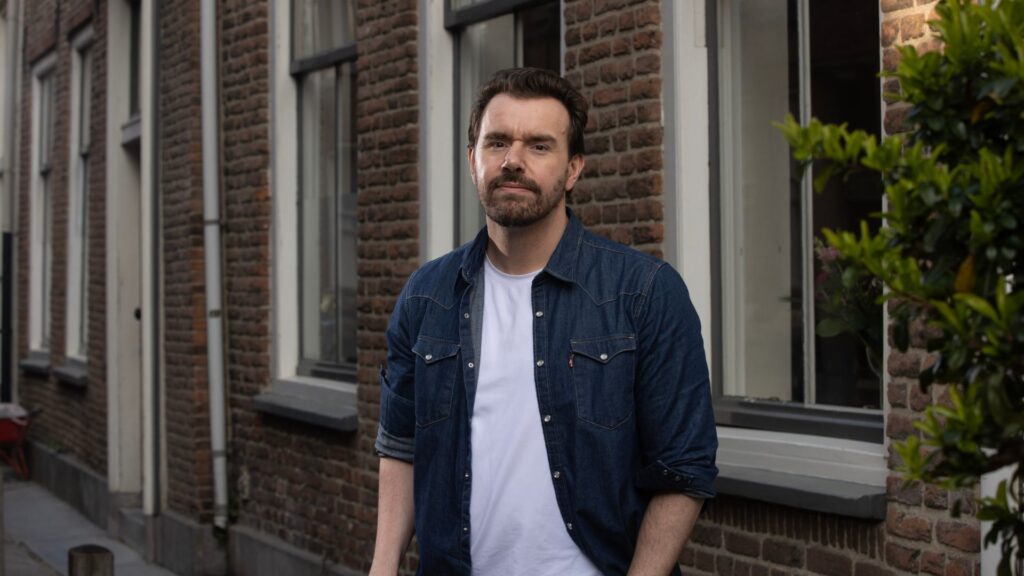
Andries Hiskes is a university lecturer affiliated with the Department of Care Ethics at the University of Humanistic Studies and is also involved in the collaboration between the UvH and Utrecht School of the Arts on Meaningful Artistic Research. Prior to this, he worked as a senior lecturer in Inclusion & Participation on the Nursing programme at The Hague University of Applied Sciences.
The NWO Veni grant is part of the talent programma of the Dutch Research Council NWO. It is designed to encourage adventurous, talented and pioneering researchers to further develop their own research ideas.