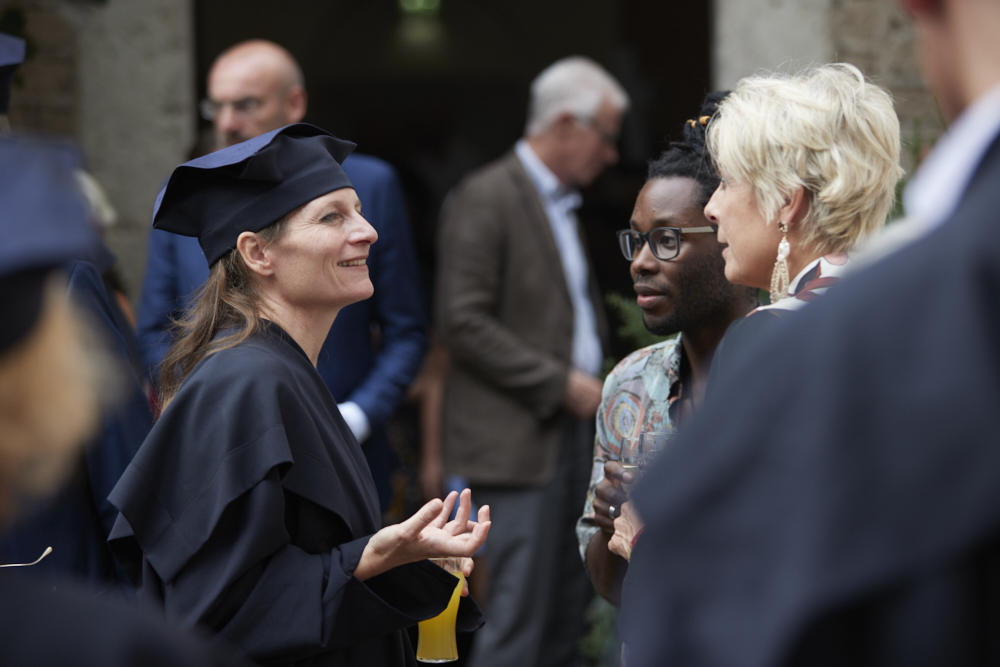


Elvira Loibl is to be appointed endowed Professor of Recognition, Dialogue and Recovery following Intercountry Adoption
The University of Humanistic Studies has appointed Elvira Loibl as Professor of Recognition, Dialogue and Recovery following Intercountry Adoption. The endowed chair has been established by INEA, the centre of expertise on intercountry adoption. Elvira Loibl will focus both on research into the recognition of past abuses relating to intercountry adoption and on how healing can take place, at both an individual and a societal level.

Elvira Loibl on the endowed chair: “Through this chair, I aim to contribute to legal clarity and consistency in addressing the complex issues surrounding state responsibility and redress. In addition, I want to strengthen the role of adoptees by placing their voices and needs at the centre of the debate, and to build a bridge between the government and adoptees in order to promote a constructive dialogue. My aim is to use this knowledge to better inform policy debates, stimulate the wider societal conversation, and work together to find meaningful forms of recognition and redress.”
New research and knowledge development
When it was established, INEA was tasked with giving new impetus to the academic infrastructure relating to intercountry adoption. The chair was established to promote research, education and the transfer of knowledge in the areas of recognition, dialogue and healing in relation to intercountry adoption. The aim of this chair is to bring together and deepen the relevant interdisciplinary academic knowledge. James Timmermans, manager at INEA: “Funding for this chair creates the opportunity to conduct new research and expand knowledge on distance and intercountry adoption. This is not only beneficial for academia, but also for practice, as it contributes to improving the care and support provided to adoptees.”
Relational perspective
The chair is based at the University of Humanistic Studies (UvH) in Utrecht. The chair operates on the basis of the Transformative Justice approach, which is an approach adopted by the Historical Memory and Transformative Justice research group at the UvH. “This framework focuses on the question of under what conditions measures of recognition and redress can truly make a difference to the lives of those who have been victims of historical injustice, including their loved ones and descendants,” says Professor Nicole Immler: “It is a relational perspective based on the idea that recognition and redress are systemic. This means that the perspectives of those affected and those involved, as well as the role of institutions, form part of the research. A relational perspective demonstrates how problems from the past continue to have an impact. From this vantage point, we examine what is needed now and in the future.”
About Elvira Loibl
Elvira Loibl is a lecturer in Criminology and Criminal Law at Maastricht University. She has been conducting research into intercountry adoption for over ten years, approaching the subject from various perspectives, including human rights, family law, anthropology, criminology and criminal law. In 2019, she was awarded her PhD for a criminological study into the factors within the German and Dutch adoption systems that enable and facilitate illegal intercountry adoptions.
More recently, her research has focused on the aftermath of illegal intercountry adoptions, in particular on the responsibility of receiving states, including the Netherlands, to provide forms of redress, and on the question of how the harm suffered by adoptees and their biological families can be effectively recognised and addressed. Elvira is regularly consulted by government bodies and commissions investigating past intercountry adoptions, and her academic work is frequently cited in official investigations and reports.